
Affordable Comprehensive Eye Exams
Routine eye exams are an important part of preventative health care. Even with perfect vision, an annual eye exam is a simple, cost-effective way to protect your vision and health.

Eye Boutique Eye Exams
Eye Exam Cost
Your eye exam may be covered by insurance. Be sure to ask us about your plan prior to or during your visit.
Who Should Get Checked and When?
Eye exams are important for everyone, from children to adults and seniors. Even if you have no symptoms, regular eye exams help maintain healthy vision and detect problems early.
What Happens During Pretesting?
Pre-testing
Before your exam, our opticians may perform quick, non-invasive screenings, like autorefraction, eye pressure checks or visual fields tests.

Autorefraction
An autorefractor measures how light changes as it enters your eyes to quickly estimate your vision prescription.

Tonometry
An autorefractor measures how light changes as it enters your eyes to quickly estimate your vision prescription.
Visual Field Tests
During a visual field test, you’ll look straight ahead while small lights flash in your side vision to check how well you can see in your peripheral view.

Retinal Imaging
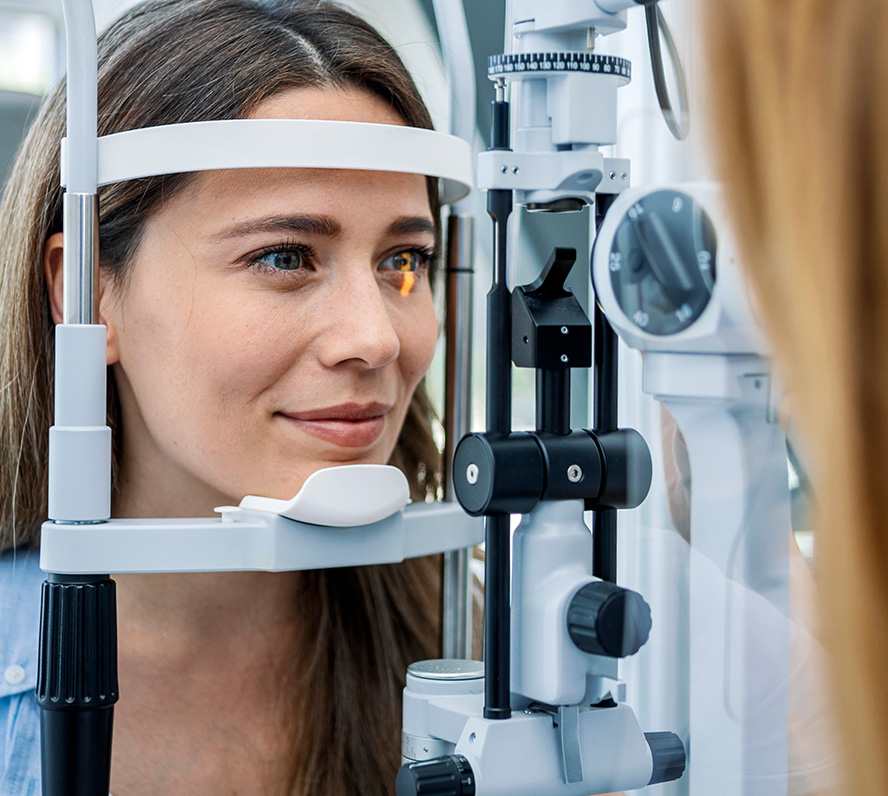
During retinal imaging, a special camera takes detailed pictures of the back of your eye without dilation. The process is quick, comfortable, and provides immediate results.
What Happens During Your Eye Exam?
Eye Exams
Your overall health, previous visits, and current symptoms will determine the specific tests included in your next eye exam. In general, a comprehensive adult eye exam may include:

Eye Movement Tests
Assess how well your eyes change focus and move in unison to evaluate focus or binocular vision.
Eye Health
Your doctor uses eye charts and specialized tests to check visual sharpness, depth perception, color vision, side vision, eye muscle movement, and light sensitivity.
Refraction
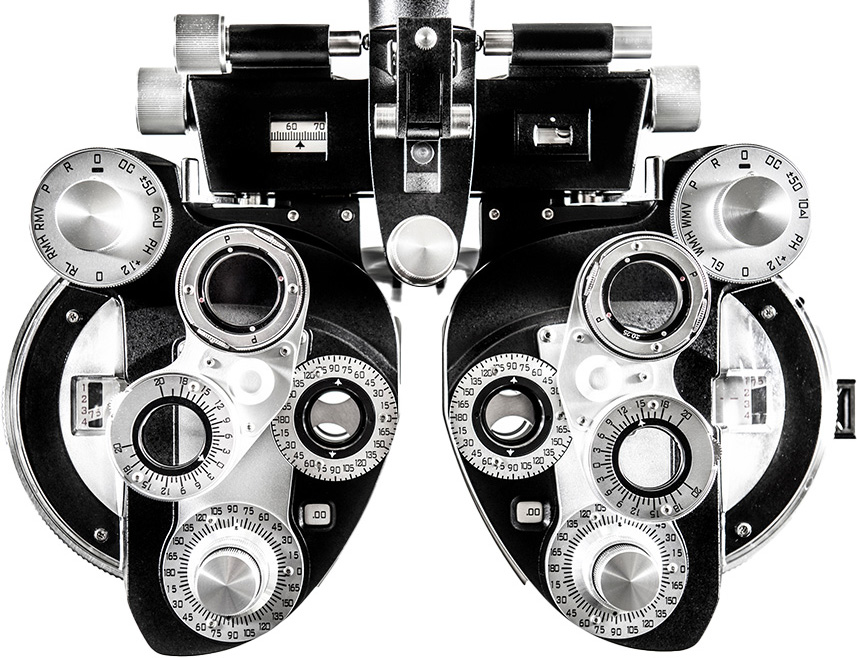
Your doctor tests how lenses focus light while you choose which option looks clearer, helping refine the prescription for nearsightedness, farsightedness, or astigmatism.

Keratometry
A circle of light is focused on the cornea (the clear outer part of your eye) and its reflection is measured. This lets your optometrist measure the outer contour to measure astigmatism and get the right fit for contact lenses.

Dilation
*only if necessary
Eye drops dilate the pupils for your doctor to view your retina, optic nerve, and other internal eye structures.
Book Eye Exam
Click the button below to view our locations and book an eye exam near you!
Eye Exam Types
Comprehensive In-Store Eye Exam
A full evaluation with one of our doctors, including vision testing, eye health assessments and personalized recommendations.
Contact Lens Exams
If you wear or want to start wearing contact lenses, you’ll need a contact lens exam and fitting to measure your pupil and iris, map your cornea, and evaluate your tear film.
Eye Exams for Everyone.





How Often Do I Need My Eyes Checked?
The American Optometric Association recommends the following guidelines for people with no signs of eye or vision problems:
5 – 18 Years
Once a year
19 – 60 Years
Every 1-2 years or as recommended
60+ Years
Once a year
*Our doctors of optometry provide eye exams for children aged 5 and older. For children younger than 5, please contact us for a referral.
If chronic conditions like diabetes or glaucoma run in your family, you may need more frequent checkups. Our optometrists provide eye exams for patients with diabetes and are qualified to treat eye problems associated with Type 1 or Type 2 diabetes.
Why exactly are eye exams so important?
Disease prevention & early detection of serious health problems.
Health problems, including cancer, hypertension, diabetes, and more, can be detected during a routine eye exam. Your eye doctor can notice warning signs of systemic diseases by evaluating the blood vessel health in your retina. Many eye diseases don’t have obvious symptoms such as pain or vision changes, until a serious eye problem has developed.
Experience healthy, perfect vision at every stage of life.
You may not realize you’re missing perfect vision until you see it. For children, vision issues can affect learning, sports and social growth.
For most all ages, long hours on screens often bring digital eye strain, causing dryness, headaches, and blurred vision. Thus, eyesight can decline gradually.
If any of the following are true, it’s time to schedule an exam:
- You experience headaches, squinting, or blurred vision.
- Driving at night has become difficult.
- You’ve noticed a sudden increase in ‘floaters,’ spots, and/or bright flashes.
- You have chronic eye pain, redness, dryness, itching, discharge, or irritated skin around the eyes.
- You’ve experienced an injury to the eye or eye area.
Using insurance for an eye exam
At Eye Boutique, we take most types of vision insurance and offer free coverage checks to make sure you’re getting the maximum benefits from your plan. If there are any out-of-pocket expenses associated with getting your eye exam, we’ll tell you exactly how it breaks down so you won’t have any surprises.